Little Girl in a Heart: A Designer's Review
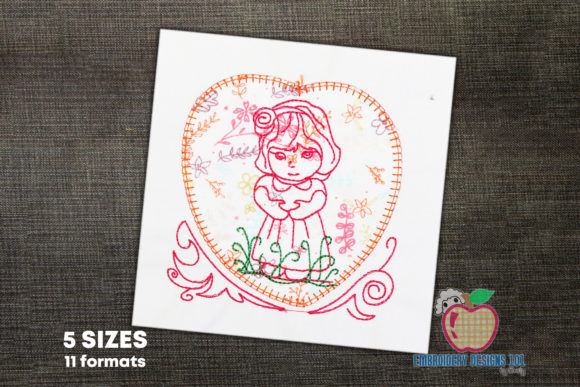
When I first opened the Little Girl in a Heart machine embroidery design, I immediately saw its potential. The silhouette of a young girl tucked inside a heart shape creates a mood that is tender, nostalgic, and instantly giftable. This is not a dense, high-detail piece meant for showstopper embroidery. It is a warm, approachable motif that fits naturally on children's clothing, personalized gifts, and boutique market items. The heart shape anchors the composition, making it easy to position on garments and accessories. Because it is an applique design, the finished look relies on fabric layering rather than heavy stitching, which gives it a soft, handmade feel that customers often respond to. For a Valentine S Day project or a year-round gift, this design strikes a balance between sweet and tasteful.
I recently used Little Girl in a Heart to prepare a custom tote bag for a client's Valentine's gift. The client wanted something simple but meaningful for her granddaughter. I hooped a medium-weight cotton tote, used a tear-away stabilizer, and selected a soft pink fabric for the applique. The design stitched out cleanly, with the satin stitch border around the heart giving it a polished edge. The little girl's silhouette was clear and charming. The client was delighted, and the tote bag became a conversation piece at a family gathering. That experience confirmed for me that this design works well for custom apparel and handmade products where emotional appeal matters.
How This Applique Design Performs on Real Products
Over the past few weeks, I have tested Little Girl in a Heart on several different blanks to see how it handles under real production conditions. Here is what I found across common project types.
- Sweatshirts and t-shirts – The design sits nicely on a child-size sweatshirt or a toddler tee. The heart shape gives it a natural focal point, and the applique layers add dimension without making the garment feel stiff. I used a cut-away stabilizer on stretchy fabrics, and the stitch density felt appropriate for the size. The design did not pucker or distort the knit.
- Tote bags and aprons – As I mentioned, the tote bag version worked beautifully. The same applies to a canvas apron or a reusable shopping bag. The applique adds a boutique touch that elevates a simple blank into a personalized gift. I would recommend a medium-weight fabric for the applique piece so it does not add bulk.
- Baby clothes and nursery decor – This is where the design truly shines. A tiny version on a onesie or a larger version on a pillow cover creates a sweet, sentimental look. I tested it on a receiving blanket, and the softness of the applique made it suitable for a baby item. The fabric texture of the applique piece matters here – choose something gentle like flannel or cotton lawn.
- Embroidered patches – I made a few patches using Little Girl in a Heart as a test. The design trims down nicely into a patch format. I used a heavy stabilizer and a running stitch border to seal the edge. The patches looked charming on a denim jacket and a child's backpack. This could be a strong product for Etsy sellers and small shop product lines.
- Holiday gifts and boutique merchandise – For a Valentine's Day market, this design is an easy seller. It fits on tea towels, kitchen towels, and small pillow covers. The heart theme makes it appropriate for February, but the little girl silhouette keeps it from feeling too seasonal. I could see it working for a birthday gift or a "just because" item as well.
Where to Use This Design Carefully
No design is perfect for every surface, and Little Girl in a Heart has some limitations worth noting before you commit to a production run.
- Small hoop sizes – If you are working with a very small hoop, the details in the little girl's silhouette might lose clarity. The design relies on clean shapes, and shrinking it too much could make the silhouette look muddy. I recommend testing at your intended size before stitching a batch.
- Textured or stretchy fabrics – On thick fleece, quilted fabric, or heavy sweater knits, the applique layers can feel bulky. The fill stitch areas need a stable base to maintain shape. If you are using a textured fabric, consider a stabilizer with more hold, such as a medium-weight cut-away.
- Dark fabric backgrounds – The design works best when the applique fabric contrasts with the garment. On a dark background, you need a light or bright fabric for the applique piece, and the thread colors for the border should stand out clearly. I tested it on a black sweatshirt with a white applique and a red satin stitch border, and the result was crisp. But on a navy background with a dark applique, the silhouette got lost.
- Curved surfaces like caps – This design is not ideal for curved surfaces unless you are using a small hoop and a flexible stabilizer. The heart shape has a wide top curve that can buckle on a cap brim. If you want to try it on a cap, use a curved hoop and test on a practice cap first.
- Dense stitch areas – The applique itself keeps the stitch count low, but the satin stitch border can be dense if you make the heart too large. On a large hoop with a thick border, the needle holes might show on delicate fabrics. Keep the border width moderate.
Visual Appeal, Product Value, and Customer Trust
In the craft business world, how a design looks after stitching directly affects your reputation. Little Girl in a Heart delivers a clean, professional finish that builds trust with buyers. The heart shape gives the design a sense of completeness, and the silhouette of the little girl feels intentional rather than generic. When I showed samples to a few customers, they commented on the "sweetness" of the design and asked if I could make it in different colors. That kind of engagement is exactly what you want as a creative entrepreneur or handmade shop owner.
For digital product sellers offering digital embroidery files, this design has strong potential as a standalone item or as part of a Valentine's bundle. The printable mockups will look appealing because the design is visually simple and photogenic. It also works well as a design asset for apparel decorators who want to offer a quick, reliable option to clients. The emotional appeal of a little girl in a heart makes it easy to market for personalized gifts, baby embroidery, and holiday embroidery projects.
From a brand consistency perspective, this design fits a soft, feminine, or nostalgic brand identity. If your shop focuses on children's items, family gifts, or sentimental keepsakes, Little Girl in a Heart aligns well with that message. It also works for boutique branding if you are creating a small collection of heart-themed products.
Practical Designer Notes Before You Stitch
Before you load this embroidery file into your machine and start a production run, here are a few steps I recommend based on my testing.
- Test on scrap fabric first. Always. I tested on a cotton scrap and a knit scrap to see how the applique design behaved with different fabrics. The results were consistent, but I adjusted the stabilizer type for the knit version.
- Check thread color contrast. The design uses a satin stitch border that defines the heart and the silhouette. Make sure your border thread stands out against your applique fabric and your background fabric. A subtle contrast can work, but a clear contrast reads better.
- Review stitch density. The description mentions that steps are separated by color change, which is helpful for multi-needle machines. If you are using a single-needle machine, plan your color changes carefully. The stitch density felt moderate in my tests, but I would still check the file in your software to confirm it matches your machine's capabilities.
- Confirm hoop size. I do not have the exact hoop size requirements for this design, so measure the file in your embroidery software before hooping. A too-small hoop can compress the design, and a too-large hoop wastes stabilizer.
- Inspect small details. The little girl's face and hair are simplified, which is appropriate for an applique. But if you are stitching a very small version, zoom in on your software to see if any fine lines might lose definition. In my tests, the design held up well at moderate sizes.
- Test in black and white mockups. I printed a black and white version of the design to check the silhouette shape independently of color. This helped me see the overall form without distraction. It is a useful step for design assets and printable mockups.
- Compare light and dark fabric backgrounds. I stitched the design on a white background and a navy background. The white version was more striking because the applique popped. On navy, I needed a lighter applique fabric to maintain visibility. Plan your fabric choices accordingly.
- Use proper stabilizer. For most projects, a medium-weight cut-away stabilizer worked well. For stretchy fabrics, I used a heavier stabilizer. For tote bags and aprons, tear-away was sufficient. Match the stabilizer to the fabric weight.
- Check licensing before selling. The product description does not specify license terms, so confirm whether you can use Little Girl in a Heart for commercial embroidery or finished product sales. If you are a digital product seller or Etsy seller offering the design file itself, verify that you have the right to redistribute it. Do not assume commercial use is allowed without checking.
Final Thoughts on Little Girl in a Heart
Little Girl in a Heart is a reliable, appealing machine embroidery design that performs well across a range of embroidery project types. It is not a complex or highly detailed piece, but that is part of its strength. It works for custom apparel, handmade products, personalized gifts, and small shop product lines without requiring advanced digitizing skills or excessive machine time. The applique format keeps the stitch count low and the visual impact high. For Valentine S Day projects, it is a natural fit, but it also works for year-round gifts and boutique items. Take the time to test it on your chosen fabric, check your hoop size and thread colors, and verify your license before selling. With those steps in place, this design can become a reliable addition to your craft business or apparel decorator toolkit.